


Leadership development isn’t just about grooming top performers. More than that, it is a strategic initiative that influences culture, improves retention, and builds a stronger talent pipeline. HR or L&D leaders know that simply checking the training box isn’t enough. To drive real business outcomes, the program needs to be structured, relevant, and directly applicable to leaders’ day-to-day challenges.
In this guide, we’ll explore how to design a leadership development program that delivers measurable impact and aligns with organizational goals.
1. Assess Organizational Needs and Strategic Goals
Every effective leadership program begins with understanding the current state of leadership in your organization and where it needs to go. Start by conducting needs assessments, analyzing performance gaps, and identifying future leadership requirements based on business strategy.
Ask yourself:
• What competencies are missing in our leadership pipeline?
• What strategic goals do we want leaders to support?
• Are we preparing managers for future roles, not just current responsibilities?
Gather insights from employee engagement surveys, 360-degree feedback, and direct stakeholder interviews. This ensures the program is grounded in actual business needs instead of generic development plans.
2. Define Clear Objectives and Outcomes
A high-impact program must have defined outcomes. These could include:
• Enhancing emotional intelligence and decision-making
• Reducing turnover by improving leadership communication
• Building readiness for succession roles
• Improving collaboration across departments
Each outcome should tie directly to business metrics. This alignment allows you to demonstrate ROI down the line and proves the value of your investment.
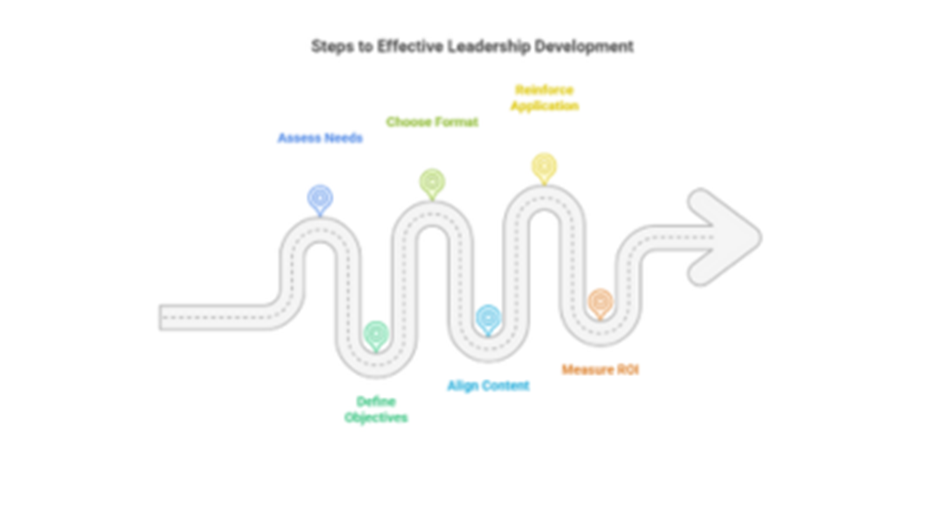

3. Choose the Right Learning Format
The next step is selecting a learning model that fits your organization’s culture and your leaders’ schedules. While in-person seminars still have value, live virtual programs are preferred for their scalability, cost-efficiency, and flexibility.
Leadership Edge Live, for example, uses a micro-learning approach with 30-minute weekly live sessions followed by real-world assignments. This not only minimizes disruption but also reinforces immediate application, a critical factor in adult learning.
Explore the Leadership Edge Live Course Catalog for practical, live programs that match your business needs.
4. Align Content to Real-World Leadership Challenges
Forget static lectures. Your content should reflect the situations your leaders face every day:
• Handling difficult conversations
• Leading hybrid or remote teams
• Navigating emotional triggers under pressure
• Building inclusive, cross-cultural teams
High-impact programs use tools like scenario-based learning, peer coaching, and feedback simulations to ensure leaders don’t just absorb content but also practice it.
This is where modular course design helps. With platforms like Leadership Edge Live, you can select skill-based courses (e.g., emotional intelligence, delegation, collaboration) that align to competency models or leadership levels.
5. Include Reinforcement and Application
Training shouldn’t end with a single session. Programs must be reinforced over time through application and coaching. Consider:
• Weekly bridge assignments
• Reflective journaling
• Follow-up coaching sessions
• Nudges and micro-content between sessions
This approach improves knowledge retention and helps convert learning into habit. Leadership Edge Live, for example, integrates this with its WRAP method (Watch, Reflect, Apply, Plan).
6. Measure and Optimize for ROI
To demonstrate business value, use pre- and post-program assessments, pulse surveys, and qualitative feedback. Tie results back to performance indicators like engagement scores, promotion rates, or project success metrics.
You might track:
• Increased internal promotions among program graduates
• Decreased attrition within leadership ranks
• Improved team performance under trained managers
Make sure to share these insights with executives to build long-term buy-in.
Final Thoughts
Designing a high-impact leadership development program requires more than good intentions. It takes strategy, structure, and consistent reinforcement. By aligning the program with organizational goals and using proven formats like live virtual learning with real-world application, you can equip leaders to drive meaningful change.
To see how this approach works in real time, explore our Enterprise Experience or browse our customizable training options.
Ready to build a leadership pipeline that drives results? Schedule a walkthrough with our team and discover how Leadership Edge Live can partner with your organization.
Frequently Asked Questions
Q1: What is a leadership development program?
A leadership development program is a structured learning initiative designed to improve leadership skills across an organization. It often includes training sessions, coaching, real-world application, and ongoing reinforcement.
Q2: How do you measure the success of a leadership development program?
Success can be measured using KPIs like internal promotion rates, employee engagement scores, manager effectiveness ratings, and retention within leadership roles. Pre- and post-program assessments also offer insights into skill gains.
Q3: How long should a leadership development program last?
Program lengths vary, but effective models often include multiple short sessions over 4–6 weeks with ongoing reinforcement. Micro-learning models with weekly application tend to be more sustainable and impactful.


